
WrapChat™ guide · Vehicle wrap design
Vehicle Wrap Design Trends That Actually Help a Brand
The useful question is not which visual trend is newest. It is which design choices make the business easier to see, understand, remember, and recognize across the fleet.
The durable idea
Bold color, geometric compositions, clean typography, photography, interactive elements, and sustainability messaging can all appear in contemporary vehicle graphics. None of them helps merely because it is fashionable. Each needs a clear brand job.
At a glance
Use these signals to structure the decision.
One idea leads
Make the company and service category clear before adding supporting detail.
Readability survives motion
Use scale, spacing, color relationships, and clear forms for real viewing conditions.
The fleet looks related
Repeat recognition cues while adapting layouts to different bodies and roles.
Principle 01 · Clarity
Clean does not mean empty. It means the reading order is intentional.
A vehicle is not read like a brochure. The company, category, and most useful recognition cues need to work in a short encounter.
Small service lists, multiple slogans, and equal visual weight can make a large wrap feel less understandable.
Clear type
Choose letterforms and spacing that remain legible against the background and vehicle shape.
Message discipline
Let supporting channels carry the information the vehicle cannot communicate well.
Useful contrast
Test color and value relationships in context rather than relying on novelty alone.
Principle 02 · Composition
Use the vehicle geometry instead of fighting it.
Bold fields, stripes, geometric forms, photographs, and illustrations work best when their focal points survive doors, seams, windows, handles, wheel arches, and changing angles.
A flat artwork file becomes a vehicle design only after it is adapted to the specific body.
Graphic geometry
Align strong visual movement with the vehicle’s stance and major surfaces.
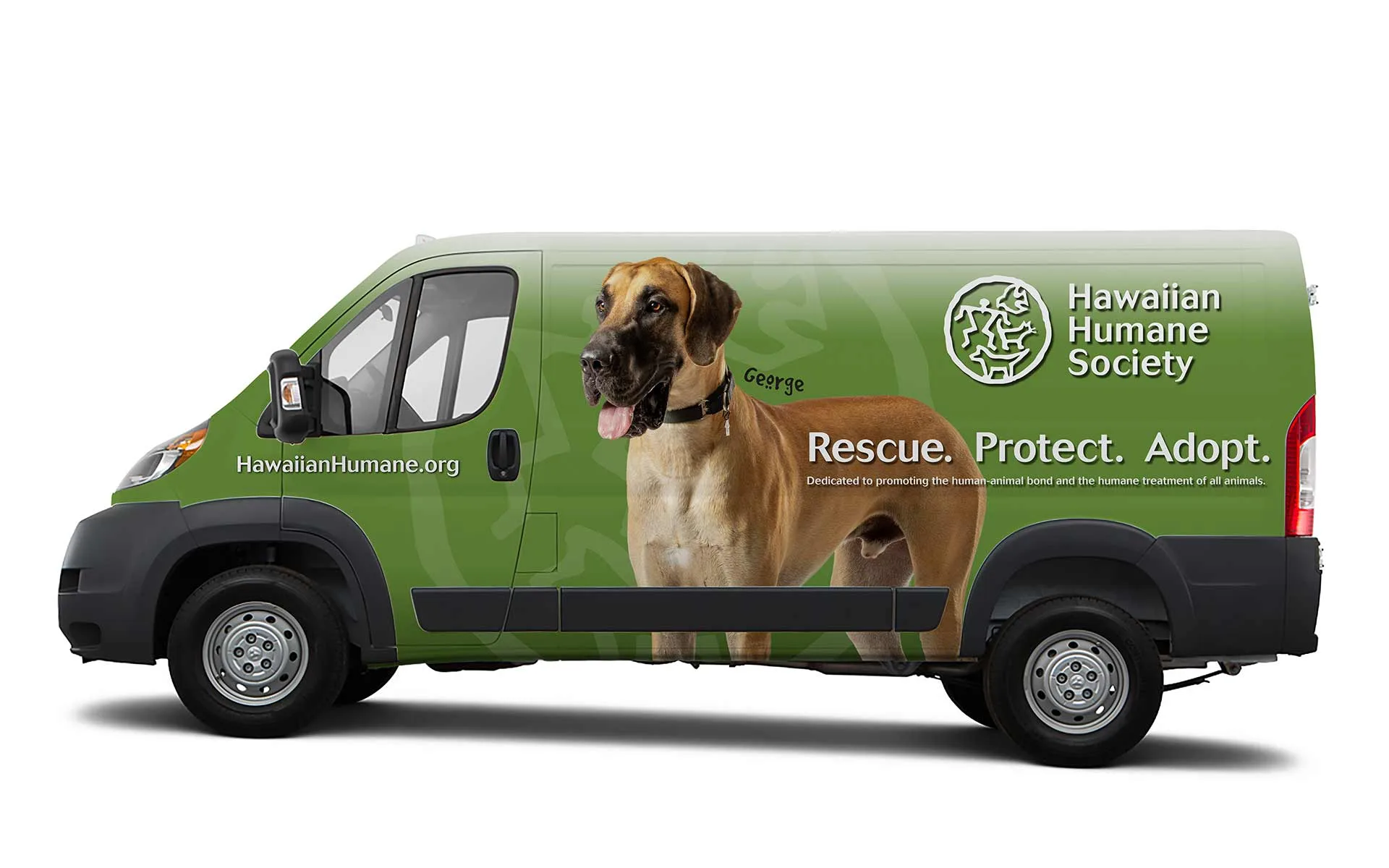
Photography
Use properly licensed, production-quality imagery with focal points placed away from interruptions.
Negative space
Give important information room to remain distinct rather than filling every panel.
Principle 03 · Brand system
A recognizable fleet is more valuable than a collection of individual trends.
A strong identity can adapt to vans, pickups, trucks, and specialty vehicles without copying one composition onto all of them.
Color, type, imagery, hierarchy, and placement rules create continuity while each body gets a responsible layout.
Repeat the signal
Carry the most distinctive brand cues across vehicle types and coverage levels.
Adapt the layout
Respect different dimensions, openings, and primary viewing faces.
Review over time
Update the system when the brand, vehicles, condition, or business need changes—not just when a trend changes.
Put the guide to work
Move from general guidance to the actual fleet.
- 01
Start with recognition
Define what a viewer should notice, understand, and remember after a short encounter.
- 02
Choose a hierarchy
Order the brand, business category, supporting message, and action by importance.
- 03
Design on the vehicle
Test the concept against body geometry, openings, angles, motion, and primary views.
- 04
Build the fleet system
Document the visual constants and body-specific adaptations that support future vehicles.
Common questions
Keep conclusions inside the available evidence.
Should a vehicle wrap follow current design trends?
Only when a trend supports the brand, audience, vehicle, and recognition goal. Clarity and consistency matter more than novelty.
Are QR codes always useful on vehicle wraps?
No. Size, viewing conditions, safety, placement, destination, and the likelihood of stationary use all matter. They should never replace a clear brand and message hierarchy.
Can photography work on a commercial vehicle?
Yes, when imagery is properly licensed, production-ready, brand-relevant, and composed around the actual vehicle without weakening legibility.
Next read, next decision
Connect the idea to real vehicles and business context.
Explore the work for visual context, or use FleetReview™ when the question is specific to your fleet.